
How much does home staging cost in the UK?
Home staging is a powerful tool for transforming your property and accelerating its sale. As experts in the field, we at The Property Presenters understand that cost is a crucial consideration for homeowners looking to present their property in the best possible light. While staging is often seen as an additional expense, it’s more accurately an investment - one that can significantly influence buyer perception, reduce time on the market, and ultimately increase the final sale price.
Understanding home staging pricing
If you’re scrolling the internet looking for an answer to this question, you will often see a figure of 1%–2% of the property’s value given as an answer. This, to be honest, is misleading and out-of-date information. Property markets vary dramatically across the UK, and pricing structures need to reflect that reality.
To illustrate the issue, consider two identically sized properties—one in London and one in Liverpool. Applying a flat percentage (say 1.5%) would result in vastly different staging costs purely based on location, not on the actual work required. This approach fails to account for the true variables involved in staging and can create confusion for homeowners trying to budget effectively.
An established staging business, like the Property Presenters, understands its local market and will base its pricing on a range of practical factors rather than a simplistic percentage. These factors ensure a fair and tailored quote that reflects the actual scope of the project.
Key factors that influence home staging costs
Property Size: Naturally, the size of the property plays a significant role in determining staging costs. A one-bedroom flat requires far fewer furnishings and accessories than a four-bedroom detached home. Larger properties demand more furniture, artwork, soft furnishings, and styling details to create a cohesive and appealing look throughout.
However, it’s not just about filling space—it’s about creating balance and flow. Each room needs to feel purposeful and inviting, which requires careful planning and appropriate furniture selection.
Scope of Work: Not all staging projects are the same. Some homeowners opt for full property staging, particularly if the home is vacant. This involves furnishing and styling every key room, including living areas, bedrooms, dining spaces, and sometimes even outdoor areas.
Others may choose partial staging, focusing only on key areas such as the living room, kitchen, and principal bedroom. This approach can be more budget-friendly while still delivering strong visual impact. Also, some properties already contain some items which can be used in the staging, and this will almost certainly help to keep costs down.
There is also “styling” for occupied homes, where existing furniture is enhanced, rearranged, or supplemented with additional pieces to elevate the overall presentation. Although this isn’t a service offered by The Property Presenters, we recognise that it is a valuable tool in occupied homes, and there are many businesses specialising in this field.
Staging duration: The length of time a property remains staged is another important consideration. At The Property Presenters, our standard contract is typically three months, which aligns with average offer to exchange timelines. It is always advisable to keep the property staged until exchange of contracts to maintain its appeal throughout the sales process, and to mitigate against the possibility of a sale failing before exchange and the need to re-stage. Sadly, the average rate of fall-throughs in the UK is between 25% and 30%, and having to arrange to stage again is a headache which no seller needs.
It’s also worth noting that some staging businesses may advertise a low ‘From’ price, but this may only give you a 6- or 8-week rental period. There will then be additional hidden costs to extend the contract until you and your buyer are in a position to exchange.
In areas where leasehold property is prevalent, the average offer to exchange time often increases due to additional legal complexities, so this is another factor to consider when deciding on a staging contract term. In London, around 36% of all property is leasehold, rising to 90% in new-builds. Sales of these properties could take longer than an equivalent freehold, and it’s important that sellers understand and discuss this with their estate agent, conveyancer and staging professional.
For developers with multiple units, longer staging periods—such as six months or more—are common. This ensures that show homes remain consistently attractive to prospective buyers and can be used as a marketing tool across the sale of multiple properties.
In the same way that we don’t have a generic approach to our staging design, the same applies to our contract terms. We will also endeavour to tailor our approach to suit our private and developer client’s circumstances and requirements, resulting in a bespoke arrangement and a positive outcome.
Furniture and accessory quality: The quality and style of furniture and accessories used in staging can significantly influence cost. High-end properties demand premium furnishings that reflect their value and appeal to their target market. Conversely, more modest homes benefit from clean, modern, and well-coordinated pieces that maximise space and light.
At The Property Presenters, we do not believe in a “one-size-fits-all” approach. Every property is unique, and staging should reflect that. We carefully select items that complement the property’s architecture, location, and target buyer demographic. Smaller or less established stagers often refer to ‘kits’; sets of furniture and accessories which they use together over and over again. Kits of inventory make no allowance for the individuality of a property but are certainly cheaper – there is no design time involved and no new items purchased to fully compliment a room. If cost is the only deciding factor, then this approach will suit some sellers, but it’s likely to compromise the quality and effectiveness of the staging and the desired result of a faster, higher value sale. We genuinely believe that good staging isn’t cheap, and cheap staging isn’t good.
Location and accessibility: Logistics also play a role in pricing. City centre properties can present challenges such as limited parking, restricted access times, and congestion charges. These factors can increase the time and cost involved in delivering and installing staging items.
On the other hand, rural or remote properties may require longer travel times and additional planning to transport furniture and accessories. Both scenarios can influence the overall cost of staging.
Why home staging is worth the investment
While cost is an important consideration, it’s equally vital to understand the value that staging brings. Home staging is not just about making a property look attractive—it’s about creating an emotional connection with potential buyers.
First Impressions Matter: In today’s digital-first property market, most buyers begin their search online. Professional photography is often the first point of contact, and staged properties consistently stand out in listings. A well-staged home photographs beautifully, attracting more clicks, more viewings, and ultimately more interest. Without staging, even a well-maintained property will appear flat or uninspiring in photos.
Helping Buyers Visualise the Space: Empty properties can be difficult for buyers to interpret. Without furniture, rooms can feel smaller, colder, and less inviting. Staging provides context, showing how each space can be used and helping buyers imagine themselves living there. This emotional engagement is a key driver in purchasing decisions. When buyers can picture their future in a property, they are more likely to make an offer—and often a stronger one.
Faster Sales: Staged properties typically sell faster than unstaged ones. By presenting the home in its best possible light, staging reduces the likelihood of prolonged time on the market, which can often lead to price reductions. A quicker sale not only reduces holding costs (such as mortgage payments, utilities, and council tax) but also minimises the stress associated with a drawn-out selling process.
Data from the Zoopla Housing Market Rankings Report 2026 states that in London and the South East, the average time for a seller to receive an acceptable offer is between 45 and 78 days. In 2025, properties staged by The Property Presenters went under offer in an average of just 31 days, which demonstrates the amazing impact of professional staging. See our Case Studies page for specific examples of the difference we can make (coming soon).
Maximising Sale Price: One of the most compelling reasons to invest in home staging is its potential to increase the final sale price. By enhancing the property’s appeal and creating a competitive environment among buyers, staging can lead to higher offers. Even a modest increase in sale price can significantly outweigh the cost of staging, making it a financially sound decision.

How do we calculate our home staging prices?
At The Property Presenters, pricing is not generated from a template or a generic formula—it is built carefully around each individual property.
We specialise exclusively in staging vacant properties. This focus allows us to refine our processes, maintain high standards, and deliver consistently strong results for our clients.
When preparing a quote, the first step is always to review the property’s floor plan. This gives us a clear understanding of the layout, room sizes, and overall flow of the home. From this, we can accurately estimate the volume and type of inventory required to maximise appeal.
We then calculate the time required to deliver an exceptional result, including:
Site visits and consultations
A professional design approach from in-house qualified and experienced interior designers
Inventory allocation, using our fabulous, staging-specific, inventory management system
Administrative coordination
Warehouse preparation and packing
Transport logistics
On-site installation and de-stage
All of this is managed through our in-house system, which is continually reviewed and refined to ensure accuracy. Finally, we apply a human sense-check to account for any unique elements that may influence the final cost.
‘How much does staging cost?’ v ‘what do we charge’?
So, here are the big important questions, to which there are no single definitive answers, but we know they are the questions which our readers want us to answer.
These are, in fact, two different questions, and here’s why:
You may have typed ‘how much does staging cost’ into a search engine, and chances are you’ll have found a generic answer such as ‘1 bedroom flat - £2,500 to £4,000’. It may be possible for someone to stage a 1-bedroom flat, somewhere in the UK within this price range. But this isn’t your 1-bedroom flat, and it certainly isn’t your 4-bedroom house. This is probably an AI generated answer, which has no relevance to you or your property.
You may have also encountered some other staging websites which give a bafflingly long, and often contradictory, list of price ranges, regional variations and services. It’s probably worth noting that most staging businesses in the UK work within a particular geographic area. It’s not relevant for us to give our clients guide prices for staging services in locations where we don’t work.
Asking ‘How Much Does Staging Cost’ is the same as asking ‘how much does it cost to buy a car?’. There are cheap cars, mid-range cars and there are expensive cars! We know that. Similarly, there is excellent staging, there is acceptable staging and increasingly there is downright awful staging! All staging businesses are different, and the quality and service levels vary immensely.
Because we pride ourselves in our unique, bespoke approach, and we don’t believe in publishing bland, untargeted and generic information; we think the best way to answer these questions is not to focus on ‘How Much Does Staging Cost’ but to give real, authentic answers based on actual case studies and our own data. So, the actual question to be answered is ‘What Do We Charge?’.
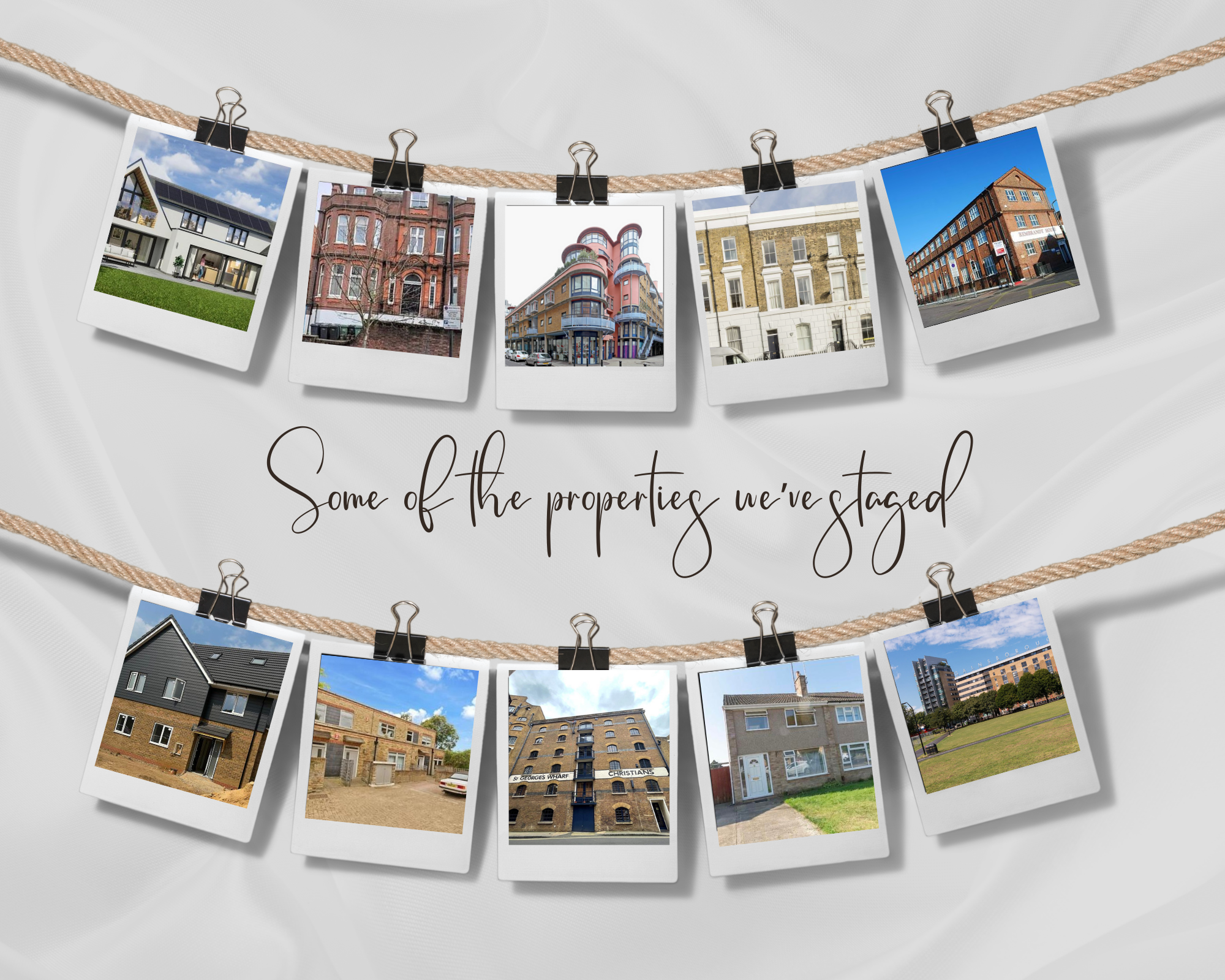
Within these Staged and Sold Case Studies we are demonstrating the scope of our experience and the huge range of different properties which have been staged by us and sold by our estate agent partners. You can see more detail, and the visual impact of each one, by clicking the links.
| Property | Location | Detail | Client Investment in Staging | Outcome |
|---|---|---|---|---|
|
Apartment in 1990s block |
East London |
2 bedrooms |
£5,860 | Offer accepted, 10 days after staging and re-marketing at £10k over asking price |
| Split level period maisonette | North London |
3 bedrooms |
£7,500 | Offer accepted at £50k over asking price within 3 weeks of staging |
| 1950s built semi-dethatched house | Hitchin, Hertfordshire |
4 bedrooms |
£6,800 |
Offer accepted, 12 days after staging and launch at £10k over asking price |
| Apartment in period conversion | East London |
2 bedrooms |
£3,465 | Offer accepted, 3 days after staging and relaunch at £12k over asking price |
| Warehouse-style penthouse apartment | Central London |
2 bedrooms |
£5,835 | Offer accepted, 12 days after staging at £18k over asking price |
| Modern apartment | Harpenden, Hertfordshire |
2 bedrooms |
£4,500 | Offer accepted, 8 days after staging at £40K over asking price |
| Architect designed 3-storey house | East London |
2 bedrooms |
£5,800 | Offer accepted, 14 days after staging and relaunch at £15k over asking price |
These are genuine jobs, executed by The Property Presenters, which give real examples of our staging prices. Each job had it’s own unique factors which influenced the price. It’s not purely based on size, number of bedrooms or location. There are many reasons why some prices appear higher than others, including transport costs and times, Congestion Charges for some London property, parking costs, the number of staff we feel will be required to carry out the job and the required lead time.
The only way to truly understand what we would charge to stage your own property is to ask us for a free, no obligation quote. This will be bespoke to you, and that’s what matters. As a property seller, if you’re asking the question ‘How Much Does Staging Cost?’, the only cost which is important to you is what it’s likely to cost YOU. Not a wide range of costs based on other properties in different areas. Not a confusing jumble of information pulled from multiple online resources. Quite simply, the best approach is to ask an expert about your unique situation, and be guided by them. We can be your expert.
Breaking down the pricing
Over the many years we have been in the staging business, we’ve had countless conversations with sellers, developers and estate agents about the different elements which combine to give us our costs. It’s not a formula, but it’s important for us to explain that the rental of our inventory is only a part of the cost.
Using the example of a job costing £6,000, the approximate breakdown of the various costs is as follows:
Site visit (travel and time cost): £150
Design and Planning (time cost): £375
Warehouse handling & logistics (time cost): £375
Transport (time and fuel cost): £1,200
Install and de-stage (travel and time cost) £500
Inventory Rental: £3,400
This breakdown is a guide, and will vary by location and complexity, but illustrates the different aspects of a professional staging project.
Common misconceptions about home staging
Despite its benefits, there are still several misconceptions about home staging that can deter homeowners from considering it.
“My Property Will Sell Anyway”
While it’s true that properties in desirable areas will often sell, the question is not whether it will sell—but how quickly and for how much. Staging helps ensure that you achieve the best possible outcome rather than settling for less.
“It’s Too Expensive”
When viewed purely as a cost, staging can seem like an unnecessary expense. However, when considered as an investment with measurable returns, it becomes a strategic decision.
“I Can Do It Myself”
While there are elements of staging that homeowners can attempt themselves, professional staging brings expertise, objectivity, and access to high-quality furnishings that are difficult to replicate.
Professional stagers understand buyer psychology, current design trends, and how to highlight a property’s strengths while minimising its weaknesses.
There is a huge difference in a DIY approach and a service provided by an experienced professional. You probably wouldn’t cut your own hair if you’re not a trained hairdresser, so why would you attempt to stage your own empty property without the required knowledge and experience?
The professional home staging process
Understanding what to expect from the staging process can help sellers feel more confident in their decision and appreciate that staging is not simply the rental of a few bits of furniture.
1. Initial Contact and Quote
When we first deal with a potential new client, we are always available for telephone calls or email dialogue to get the ball rolling. We usually quote from a floorplan, but photos are also really useful, along with an understanding of the specific brief.
2. Site Visit
The next step, once a seller is happy with the quote, is typically a site visit, where we fully assess the property to ensure that we have a comprehensive understanding of the needs and allow the design and inventory allocation stage to start.
3. Design and Planning
Following the site visit we start our detailed design phase. We carefully consider each space, applying interior design principles throughout. We produce our own floor plans to ensure that each item we select fits perfectly, and create visual styling presentations to give our team a full understanding of the concept. All items are digitally catalogued to help our warehouse colleagues to seamlessly select the correct pieces.
4. Logistics Planning
We have chosen to partner with a well-established logistics business who are experts in their field. We work closely with them during this phase to co-ordinate the install dates and times, access, transport routes and requirements of the install. This ensures the install itself runs smoothly and the desired result is quickly achieved.
5. Installation
On the all-important install day, the staging team installs the furniture and accessories, transforming the property into a market-ready space. This process is usually completed in one day – with very large properties occasionally requiring an extra day.
6. Ongoing Communication
During the staging period, the property remains fully styled and ready for viewings. We keep in touch with our sellers or their agents to find out how much interest there has been in the property, how many viewings have taken place along with any feedback, and when offers and received and accepted. We continue this until we are advised of an exchange date, when we can then start to plan the de-stage in line with key dates in the sales process.
7. De-Stage
Once the property is sold or the staging period ends, the furniture and accessories are carefully removed.
Home staging costs v potential price reductions
In early 2026, the UK housing market is leaning towards a buyer’s market. Supply is at an 11-year high and sellers face fierce competition to find buyers and secure offers. In these conditions, excellent property presentation is paramount to ensure your property stands out from the crowd.
Realistic pricing from the outset is incredibly important alongside the presentation, but often agents will, after a period of unsuccessful marketing, suggest a price reduction.
In a property which hasn’t already been staged, at this point it’s always worth considering staging to enhance the appeal and attract more potential buyers. Recent data from The Negotiator suggests that over 43% of listed properties in the South East of England are reduced at least once, with the average drop being 5.2%. That’s £26,000 on a property originally valued at £500k!
Consider this against an investment in staging, which may be around £6,000. In other words,staging your property could net you an extra £20,000!
Home staging costs v cost to carry
As staging a property will often considerably shorten the time spent on the market, this should also form part of the calculations when looking at staging quote. You may still be paying a mortgage, along with council tax, standing charges for utilities, specialist insurance and maintenance charges. If you’re not marketing a property to it’s full potential through staging, these ‘Cost to Carry’ amounts could very quickly accumulate and become a significant financial burden.
Final Thoughts
If you are considering selling a property in a challenging and competitive 2026 market, home staging is one of the most effective ways to enhance your property’s appeal and achieve a successful sale. While pricing can vary depending on many factors, a tailored approach ensures that you receive the best value for your investment.
At The Property Presenters, we believe that every property has the potential to shine. By understanding the true drivers of staging costs and focusing on delivering exceptional results, we help homeowners and developers maximise their property’s potential.
If you’re considering selling your property, professional home staging could be the key to unlocking its full value.
Contact us via our online form or by calling on 01992 668091 and we’ll be happy to let you know the answer to your question ‘How Much Does Staging Cost’ with a quote specific to you and your property.